

Key Takeaways
- Some companion plant pairings have genuine research support; many others rest on garden folklore.
- Companion planting can help with space efficiency and weed suppression, which are measurable, low-cost benefits.
- Pest control through companion planting is real but inconsistent and rarely eliminates the need for other strategies.
- No companion planting combination guarantees a yield increase; results depend on soil, climate, and plant spacing.
- Treating companion planting as one tool among many is more realistic than treating it as a complete pest or fertility solution.
Companion planting
Companion planting is the practice of growing two or more different plants close together because they are thought to benefit one another. Common claimed benefits include pest control, improved pollination, better use of space, and higher yields. Gardeners have practiced it for centuries, and it remains popular in home and organic vegetable gardens.
Research on companion planting is mixed. Some pairings have measurable support from controlled studies, while many popular combinations rely on anecdotal tradition rather than replicated scientific evidence.
Where companion planting comes from
The idea of pairing plants for mutual benefit goes back thousands of years. The Three Sisters system, used by many Indigenous communities across North America, combined corn, beans, and squash in a way that had real functional logic: beans return nitrogen to the soil, squash leaves shade out weeds, and corn stalks support climbing bean vines. This is one of the oldest and most documented examples of companion planting that holds up when examined.
Most other companion planting advice developed through observation passed down over generations, not through controlled experiments. Gardeners noticed patterns, drew conclusions, and shared them. Some of those observations turned out to be accurate. Others were coincidental or context-dependent. The internet has amplified both kinds equally, which makes it hard for a new gardener to know what to trust.
If you want a broader look at which common gardening beliefs have evidence behind them and which do not, the article on garden myths covers several practices worth reconsidering.
What companion planting can genuinely do
Space efficiency is the most reliable benefit, and it costs nothing extra. When you plant a fast-maturing crop like radishes between slower-growing plants like carrots or peppers, you harvest the radishes before crowding becomes a problem. This is called intercropping, and it is a practical way to get more food from the same square footage.
Weed suppression is another real benefit. Dense planting combinations that cover bare soil quickly leave less room for weeds to establish. Squash leaves in particular are large enough to shade out a significant portion of a bed.
Some pairings attract beneficial insects. Flowering plants like dill, cilantro that has bolted, and sweet alyssum draw in parasitic wasps and other predators that feed on common garden pests. This is not pest elimination, but it adds to the diversity of insects in your garden, which can help over time.
1,000+
Years the Three Sisters system has been practiced
The Three Sisters planting method is documented across many Indigenous cultures in North America, with evidence of use spanning more than a millennium.
~30%
Potential yield increase from intercropping in some studies
Research published in agricultural journals has found that certain intercropping combinations can improve land-use efficiency compared to monoculture, though results vary by crop and region.
Minimal
Extra cost to try companion planting at home
Because companion planting uses plants you would likely grow anyway, the financial risk for a home gardener is low, making it a practical experiment for any garden size.
Nitrogen fixation by legumes such as beans and peas is real plant biology. However, the benefit to neighboring plants within the same growing season is modest. The bigger payoff comes when you till those plants into the soil at the end of the season or follow them with a heavy-feeding crop the next year. Pairing with your seasonal planting calendar helps you time this correctly.
What companion planting probably cannot do
Pest control through companion planting is real but widely overstated. The claim that certain plants "repel" pests suggests a reliable, consistent effect that research does not support at typical garden planting densities. Strongly scented plants may confuse or slow some insects in some conditions, but they do not create a pest-free zone.
Flavor improvement is another claim that lacks scientific backing. The idea that basil makes nearby tomatoes taste better is popular but has not been demonstrated in controlled studies. What is true is that both plants thrive in similar conditions, which makes them practical neighbors regardless of flavor claims.
Companion planting also cannot fix poor soil, inconsistent watering, or serious pest pressure on its own. Treating it as a complete solution will lead to disappointment. It works better when used alongside good soil preparation and appropriate watering, topics covered in the guide to stretching your vegetable garden budget.
Test one new pairing at a time
If you try several companion planting combinations in the same season and something goes wrong, or right, you will not know which pairing made the difference. Pick one new combination each season, keep notes, and build your knowledge from what you actually observe in your own garden.
How to use it without wasting money or space
Start with pairings that have practical logic, not just folk reputation. Three Sisters works because each plant fills a different vertical and physical niche. Interplanting fast and slow crops works because the timing is complementary. These combinations make sense whether or not any pest benefit materializes.
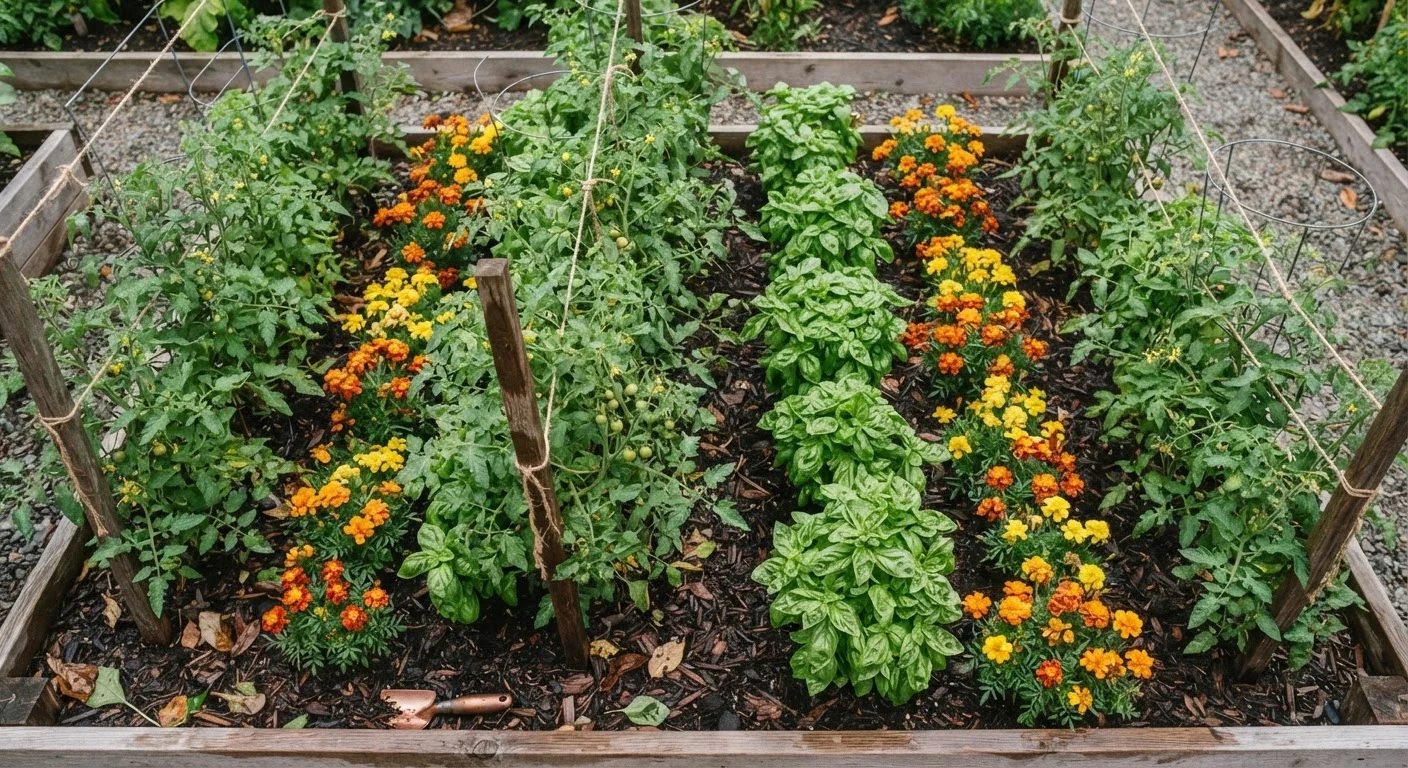
Avoid dedicating large portions of your bed to companion plants you do not actually want to eat or use. If you plant marigolds specifically for pest control but do not like them otherwise, and they do not produce the pest reduction you hoped for, you have used bed space that could have grown food.
Seeds for herbs and flowers used in companion planting are inexpensive, and many can be direct-sown. If you are weighing how to use your planting budget, the comparison of seed starting versus buying transplants can help you decide where to spend and where to save.
Keep notes on what you tried and what you observed. Your garden's specific conditions, soil type, local pest populations, and microclimate all affect whether a pairing performs as described. Personal records are more useful than generalized advice.