

Key Takeaways
- Skipping hardening off is the single most common reason healthy indoor seedlings die at transplant.
- Inconsistent watering, both overwatering and underwatering, stresses roots before they establish.
- Transplanting at the wrong soil temperature can stall or kill seedlings even when air temps feel right.
- Most seedling failures cost nothing to fix beyond adjusting timing, water, and light habits.
The gap between the grow light and the garden bed
Growing seedlings indoors takes patience and a little money for supplies. Losing them right at transplant time is one of the most discouraging things a new gardener faces. The good news is that most seedling deaths at this stage trace back to a short list of mistakes, and almost all of them are free to fix once you know what to look for.
If you are still figuring out whether to start from seed or buy transplants, see our look at seed starting versus buying transplants for a cost comparison that may change how you plan next season.
Skipping the hardening-off period before transplanting.
Why it happens: Gardeners see healthy seedlings and assume they are ready to go outside. Indoor growing conditions, steady warmth, still air, and consistent light, are nothing like outdoor exposure.
Transplanting when soil temperature is too cold, even if air temperature feels fine.
Why it happens: Air warms faster than soil in spring, and most gardeners go by feel or by the calendar rather than measuring the ground. Cold soil slows root activity and can cause a seedling to sit without establishing for weeks.
Planting too deep or at the wrong angle, burying the crown or leaving roots exposed.
Why it happens: New gardeners often try to anchor the seedling firmly, which can mean pushing it too far down. Others remove it from the cell too quickly and drop it in without checking root depth.
Watering on a fixed schedule instead of checking soil moisture.
Why it happens: Fixed schedules feel reliable and easy to remember. The problem is that soil dries at different rates depending on sun, wind, temperature, and pot or bed size.
Transplanting in the middle of a sunny afternoon.
Why it happens: Most gardening happens on weekends when there is time, and midday is when energy is high. However, transplanting in full sun and heat puts immediate water stress on a plant that cannot yet pull enough moisture from its disturbed roots.
Letting seedlings become root-bound before transplanting.
Why it happens: Life gets busy, and seedlings that were ready two weeks ago are still sitting in their trays. Roots that have circled the container often struggle to expand outward into garden soil.
What to watch for in the days after transplanting
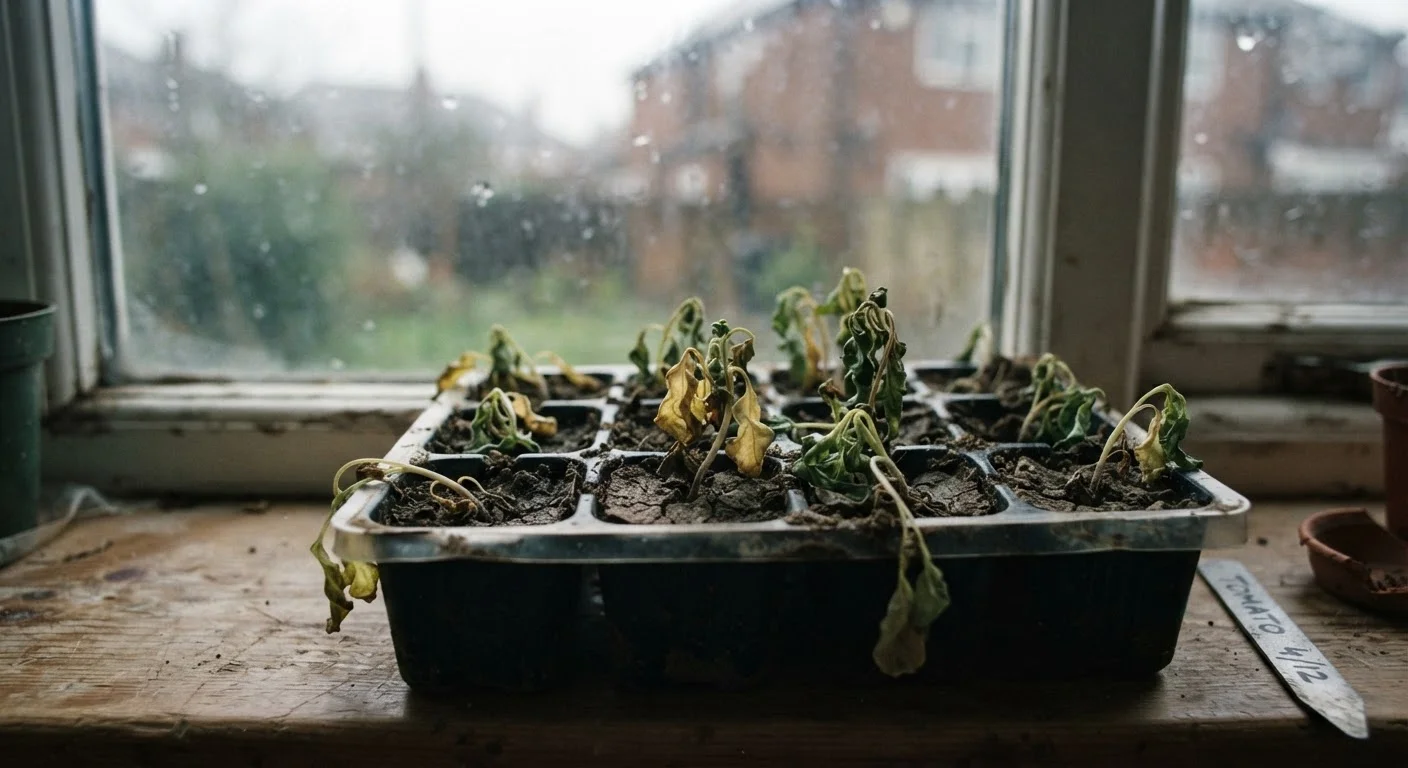
Some stress after transplanting is normal. Leaves may droop slightly on the first warm afternoon. Roots disturbed during transplanting need a few days to begin pulling water again. The warning signs worth acting on are wilting that does not recover overnight, yellowing that spreads from the bottom leaves upward, and stems that collapse at the soil line.
Damping off cannot be reversed
If a seedling's stem pinches and collapses at the soil line, the plant will not recover. The fungal pathogens responsible thrive in consistently wet, poorly aerated conditions. Remove affected plants promptly to prevent spread to neighboring seedlings, and adjust your watering and spacing habits before starting the next batch.
Collapsed stems at soil level, sometimes called damping off, are caused by a fungal problem that spreads in wet, poorly ventilated conditions. It cannot be reversed once it starts, so prevention matters more than any remedy. Thin seedlings so air moves between them, water at the base rather than overhead, and do not let trays sit in standing water.
Building good soil habits before transplant day also reduces stress on young roots. Our guide to building healthy garden soil on a budget covers composting and mulching methods that cost very little and pay off through the whole growing season.
For a broader look at what to do when your planting plans are not adding up, starting a family garden without spending a fortune walks through the foundational decisions from soil to spacing in a way that works for families watching their spending.